A whole-house generator in Maryland commonly costs about $10,000 to $14,000 installed. That covers the generator, the automatic transfer switch, the pad, permits, and the electrical hookup. A smaller essentials-only unit can sit below that range. A large house, a new propane tank, or a panel upgrade in the same project can run above it.
Those are planning numbers for the installs we do, not a quote. Whole-house generator installation is priced after a load calculation and a look at the panel, the fuel, and where the unit can sit. A diagnostic fee applies for the visit. You get a written price before we schedule the work.
Price bands by what you want running
“Whole house” gets used for two different projects. One keeps the furnace, the refrigerator, the sump pump, some lights, and the wifi on. The other starts the air conditioner and lets the house live normally through a multi-day outage. They are not the same generator.
| What stays on | Typical installed range | What you are buying |
|---|---|---|
| Essentials: heat, fridge, sump pump, a few circuits | Often below the whole-house range | A smaller standby unit and an automatic transfer switch, sometimes with load shedding |
| Most of a normal house, including central air | About $10,000 to $14,000 | The size that covers most Maryland homes through a summer outage |
| A large house, a new propane tank, or a panel upgrade in the same project | Above that range | More capacity, a longer fuel run, or the panel work quoted with the generator |
A portable generator and a manual inlet is a different product. Homeowners who only need a few circuits sometimes choose it because the electrical portion is a fraction of a standby install. It does not start itself, and it does not belong in a closed garage. If you want the house to switch over while you are at work or asleep, you want the standby unit and the automatic transfer switch.
What the installed price is paying for
The generator is roughly half the conversation. The rest is the work that makes it legal and automatic:
- A load calculation, so the unit is large enough and not wastefully oversized
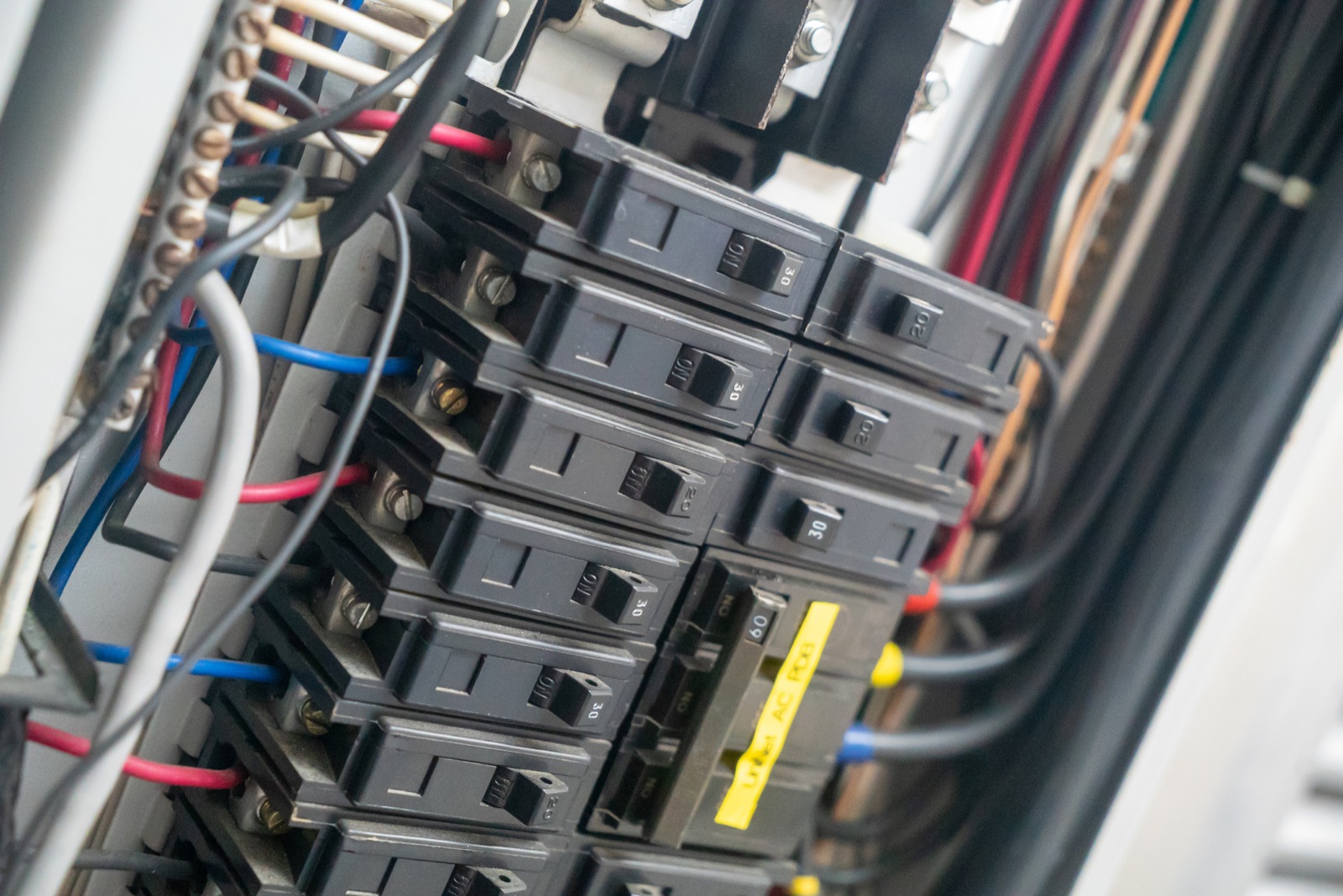
- The automatic transfer switch, mounted at the panel, which moves the house off the utility and back again
- A pad, usually concrete or a composite base set on gravel, with the clearances the manufacturer requires
- Wiring, a weatherproof disconnect, and startup testing
- The electrical permit and the inspection for your county
- Fuel: a tie-in to natural gas, or propane with a tank
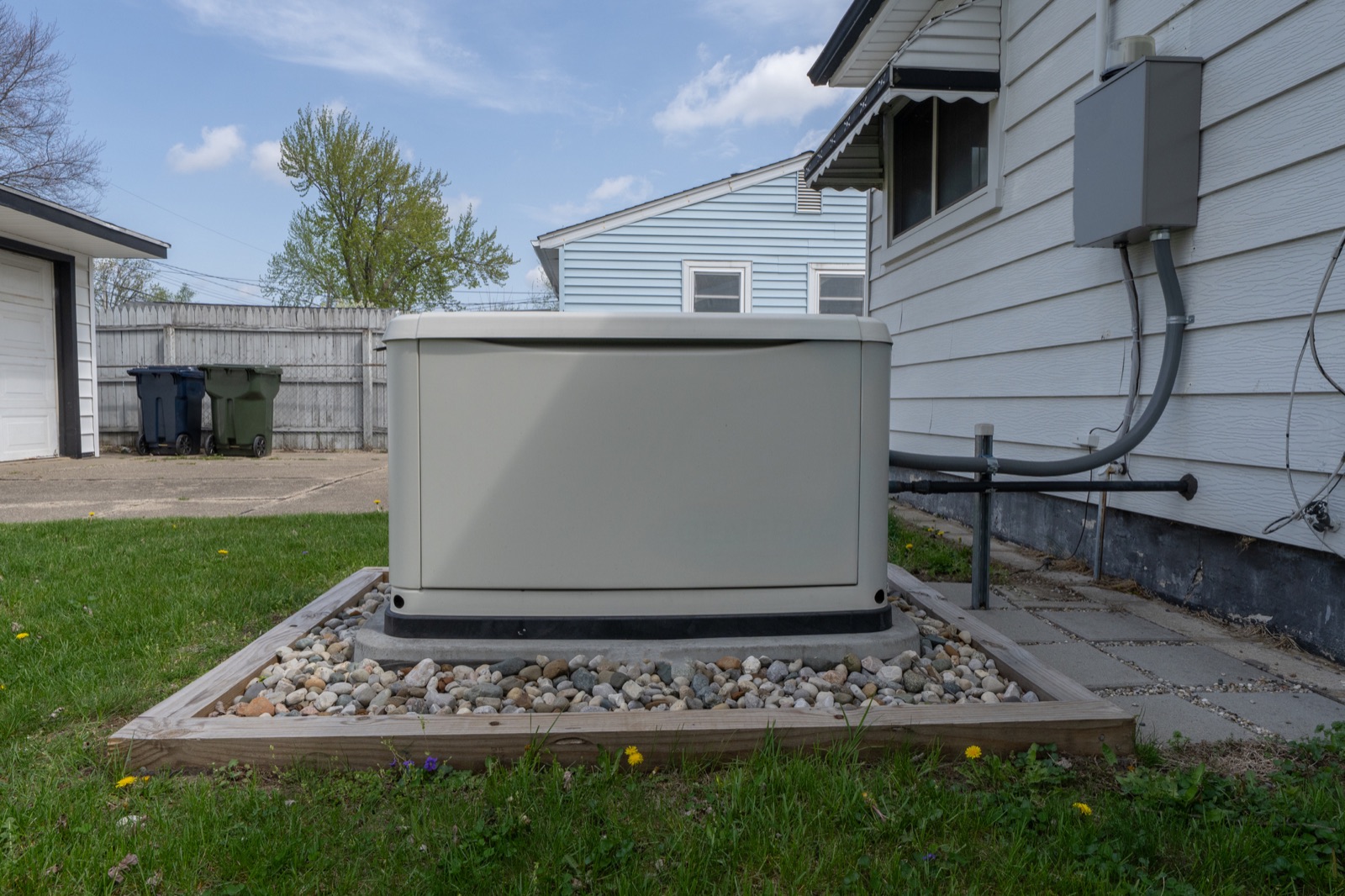
The photo on this page is a standby unit on a gravel pad in the Owings Mills service area, with the electrical connection on the side of the house. That layout, close to the meter and the panel, is the inexpensive version. A unit around the far side of the house, or one that needs a new propane tank across the yard, costs more before anyone opens the panel.
What moves the number in Greater Baltimore
Storms take the local grid down often enough that generators are a normal project from Baltimore City out through Howard and Anne Arundel counties. The quote still depends on the house:
- Fuel. A short connection to an existing natural gas meter is the lower-cost path. A new propane tank, a long trench, or a meter upgrade adds a fuel contractor to the job. We coordinate that work. We do not pretend it is included in the electrical price.
- The panel. A 100-amp or fuse-panel house often cannot take the transfer switch cleanly. Budget the 200-amp panel upgrade alongside the generator, or have us quote the panel and the generator as one project.
- Where it sits. Setbacks, a tight city lot, an HOA, and the path from the unit to the panel all change labor. Owings Mills and similar suburban lots are usually simpler than a Baltimore rowhome with a small yard.
- Permits. Baltimore City, Baltimore County, Howard County, and Anne Arundel County each inspect this work. The permit is part of a proper install, and it is how the next buyer knows the generator was done legally.
- What you insist on running. Central air is the load that jumps a house from a smaller unit to a 22 kW class machine. If you can live without air conditioning for a day, the smaller unit is a real option. If you cannot, say so at the visit.
How long it takes, and how to get your number
The set itself is often a one- or two-day electrical job once the equipment, the permit, and the fuel contractor are lined up. The calendar before that day is the longer part: equipment, the gas appointment, and the inspection schedule.
Pictures of the panel, the meter, and the side of the house where you would put the unit are enough for us to tell you whether a visit makes sense. The price comes after we calculate the load and see the fuel. Start with whole-house generators or call (443) 423-9876. If the panel has to grow to support the generator, we will say that on the same visit and price it with the rest of the job.